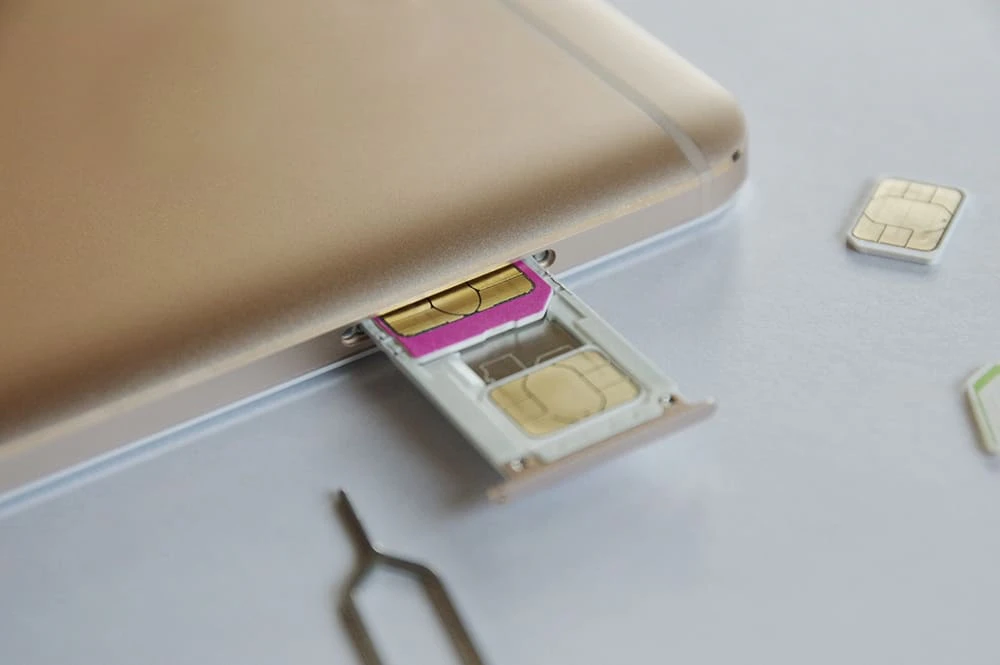
A data SIM is a SIM that is specialized for data communication and cannot be used for voice calls.
By limiting the functions to data communication only, usage fees can be kept low, which is a great benefit for those who sign up for plans with large data capacities or who do not normally make calls.
On the other hand, if you want to use an app that uses SMS for personal authentication (such as LINE or various SNS services), you will need to purchase a data SIM with SMS functionality; otherwise, you will not be able to use the app or perform personal authentication.
As you can see, there are some points to consider before purchasing, so please refer to this article.
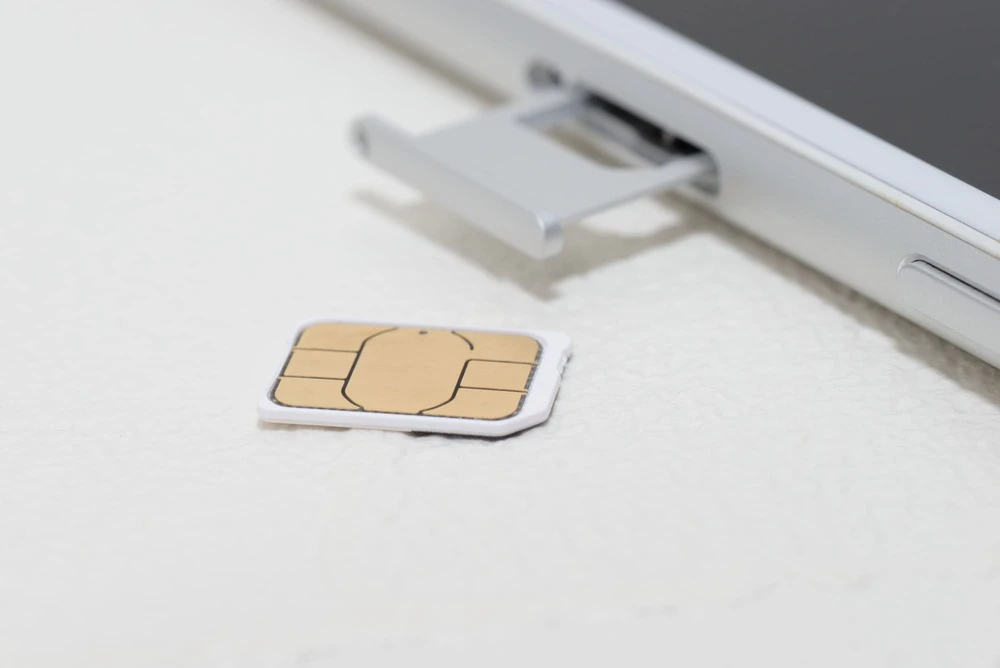
SIM is an abbreviation for Subscriber Identity Module, which means a "part that identifies a subscriber" that records information such as the subscriber's identification number and phone number. There are two types: a card-shaped "SIM card" and an "eSIM" that writes information to the terminal itself.
There are also three types of SIM cards depending on the available functions: "Data SIM," "Data SIM with SMS function," and "Voice call SIM."
[SIM types by function] (*1)
・Data SIM: Internet only
・Data SIM with SMS function: Internet and SMS (short message) available
・Voice call SIM: Calls, internet, and SMS are available
As mentioned above, a data SIM is a SIM that is specialized only for data communication using mobile lines.
For example, if you put a data SIM card in your smartphone, you can use the Internet without connecting to Wi-Fi.
However, it is specialized for data communication and cannot be used for voice calls or SMS.
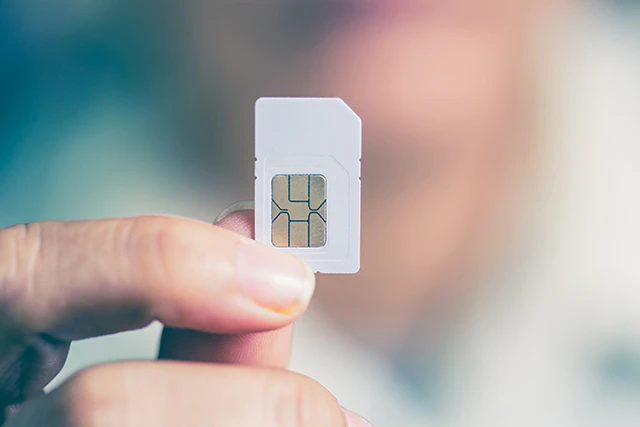
In addition, there are the following types of SIM cards for each size, and you need to choose the SIM that best suits the device you will be using.
If you get the SIM size wrong, you won't be able to use it, so make sure you know the size that fits your device before signing a contract.
| SIM card types | size |
|---|---|
| Standard SIM | 25×15mm |
| microSIM | 15×12mm |
| nanoSIM | 12.3×8.8mm |
For more information about SIM cards, please see the following article:
*1: Reference: "What is a SIM card? Explanation of its role, types, and precautions when using it" (povo)
The differences between data SIMs and voice call SIMs are as follows:
| SIM type | Features |
|---|---|
| Data SIM | You can use the internet via a mobile line ・Voice calls over telephone lines cannot be used |
| Voice call SIM | ・Voice calls are possible using telephone lines ・Everything you can do with a data SIM is possible |
There are three benefits to using a data SIM card:
Depending on the plan you sign up for, fees tend to be lower because they are specialized for data communication (no voice calls or SMS).
A data SIM is suitable for those who need a plan with a large data capacity to enjoy watching videos and playing games, or for those who do not need voice calls or SMS.
It is also suitable for those who use voice calls but only use free voice call apps that use the Internet rather than a telephone line.
Data SIM cards are convenient when using a secondary device (having two devices).
We also recommend having one smartphone with a voice call SIM card that can be used for voice calls, internet access, and SMS, and another device for data communication that can be used to check emails and watch videos.
For example, if your child uses a tablet with a data SIM card to watch videos while out and about, there is no need to hand over a smartphone with a voice SIM card.
This means you no longer have to worry about data usage on smartphones with voice call SIM cards.
Alternatively, you can insert a data SIM card into your smartphone and use the tethering function to act as a mobile Wi-Fi router.
Tethering is a function that allows you to communicate with other devices such as computers or tablets using your smartphone's mobile network, and is useful when using the Internet in places where Wi-Fi is not available.
If you purchase a separate Wi-Fi router, you will need to pay not only for internet usage fees but also for the device itself. However, if you insert a data SIM into an old smartphone (a SIM-compatible model) that you no longer use and use it exclusively for tethering, you can save on the cost of the Wi-Fi router itself (*2).
*2: Tethering may be free or paid depending on the carrier. You may need to subscribe to an option or apply in advance. For details, please check the website of the carrier you plan to use.
One of the benefits of a data SIM is that it eliminates the need for complicated procedures.
Although the procedures vary depending on the carrier, the process for applying for and completing a data SIM generally follows the steps below.
Please note that the above is the basic process when using a data SIM. If you use a voice call SIM, you may need a separate MNP reservation number.
MNP stands for Mobile Number Portability, and is a system that allows you to continue using your current phone number when you are using a voice call SIM and want to change your carrier.
In either case, if you follow the instructions on the carrier's application screen, it's not difficult and there are no complicated procedures required.
Additionally, some carriers have "frequently asked questions pages" or comprehensive "chat support" for applications and initial setup of data SIMs, so even first-time users can feel at ease.
Please be sure to check the support provided by each telecommunications carrier before proceeding with your application and procedures.
There are some concerns about the disadvantages of data SIM cards. We have summarized the points to be aware of below, so please check them out and be aware of the risks before signing up.
Please note that data SIM cards are designed specifically for data communication and cannot be used for voice calls.
Specifically, you will not be able to make voice calls using phone numbers beginning with 090, 080, or 070, and you will also not be able to make emergency calls such as to 110 or 119.
One way to avoid these disadvantages is to use a calling app like LINE, which uses an internet connection to make voice calls (however, since data SIM cards do not allow SMS authentication and therefore cannot be used to set up LINE, you will need to either have a data SIM card with SMS support or a device that can use LINE).
Although there are concerns that the quality is inferior to voice calls made over telephone lines, many people are already using it because there are no call charges.
Another option is to choose a data SIM that allows you to use IP telephones. IP telephones are generally internet voice communication services that use phone numbers starting with 050.
With IP phones, you can make and receive calls to and from phone numbers, and you can make calls not only to smartphones and mobile phones but also to landlines.
In the case of calling apps like LINE (which make voice calls using IP phones that cannot obtain numbers starting with 050), you generally cannot make a voice call unless the other person is also using the same app.
Please note that even with a data SIM, IP phones require call charges and there are some numbers that cannot be called (emergency numbers such as 110 and 119, toll-free numbers such as 0120, and NaviDial numbers such as 0570).
For details, please check the website of your telecommunications carrier.
SMS is a system that allows you to send short messages using phone numbers, and SMS cannot be used with data SIM cards that do not include a phone number in the contract.
Please note that apps such as LINE and SNS may use SMS for personal authentication (SMS authentication), which cannot be used with data SIM cards.
You can deal with this by paying an additional fees to subscribe to an option that allows you to use SMS, or by choosing a "Data + SMS" SIM that allows you to use SMS.
As mentioned in the chapter "No complicated procedures required," MNP is only available for voice call SIM cards.
In other words, if you want to use MNP, you cannot choose a data SIM and will inevitably have to choose a voice call SIM.
Now that you understand the advantages and disadvantages of data SIMs, we will explain how to choose one.
Communication speed is measured in units of "bps (bits per second)." The higher the number, the more data can be exchanged per second, allowing for a smoother internet experience.
Considering only this information, it would be fine to choose a data SIM plan with a fast communication speed, but generally speaking, if you choose a plan with the maximum communication speed, the usage fees tends to be higher.
Therefore, it is important to know the approximate communication speed depending on your usual usage.
For example, YouTube's official website states that you need an internet connection of at least 500kbps to watch videos.
Basically, if you plan to send and receive emails and LINE messages as well as browse websites, a speed of 1Mbps or more will be enough to maintain a smooth internet connection.
If you would like to know more about the best speed for you, please refer to the following article:
Data fees plans tend to be more expensive the more data you use.
For example, the price increases as follows: 1GB: 1,000 yen, 5GB: 2,000 yen.
First, start by finding out how much data you will be using.
As a rough guideline, 1GB of data will allow you to view approximately 6,600 web pages and watch approximately 30 minutes of HD YouTube videos.
If you would like to know more about the data capacity that is right for you, please refer to the article below.
Compared to voice call SIMs, data SIMs tend to be fees, even if the plan offers a large amount of available data and fast communication speeds.
Therefore, we recommend that you consider how much you can afford to fees each month.
Consider your budget and if there are no issues with the available data capacity or communication speed, you can easily decide on a plan.
On the other hand, if the data capacity or communication speed is insufficient compared to your budget, you can simply consider a higher-fees plan.
Your device may not fit the size of the data SIM you are considering.
Be sure to check in advance which sizes of "miniSIM," "microSIM," and "nanoSIM" are supported.
The current mainstream SIM card is the "nanoSIM."
If the data SIM you are considering does not fit your device, you will need to find a data SIM that fits or buy a new device.
For details, please check the official website of your carrier.
Some carriers offer comprehensive support, such as online chat to help with any concerns you may have when signing up for a data SIM, and store counters where you can pick up your SIM card.
To avoid the situation where you end up buying a cheap data SIM card but the support isn't great, it's important to pay attention to the support offered.

Through this article, we hope you are looking for a data SIM that allows you to create your own original plan, with data capacity and communication speeds that suit your usage.
For such people, we recommend "povo2.0", which allows you to customize your own plan.
povo2.0 is available for a basic fees of 0 yen (*3) (*4) (*5), and you can add any amount of data you like as Topping (for a fee).
povo2.0 does not offer a data SIM, but if you do not need calls or SMS and would like to use it like a data SIM that is specialized for data communication, we recommend topping up with plans such as "Unlimited data (*6) (24 hours)" (330 yen/time Topping tax included) or "Data Top-up 20GB (30 days)" (*7) (2,700 yen/time including tax included).
A special feature of povo2.0 is that no special application is required, and you can make domestic calls and send SMS by paying only for what you use (*4).
In addition to au 's 5G (*8) line, povo2.0 also uses au 4G LTE line, which boasts a population coverage rate of 99.99% (*9).
You can connect from various locations across the country, so if you're looking for a data SIM that suits you, be sure to consider povo2.0.