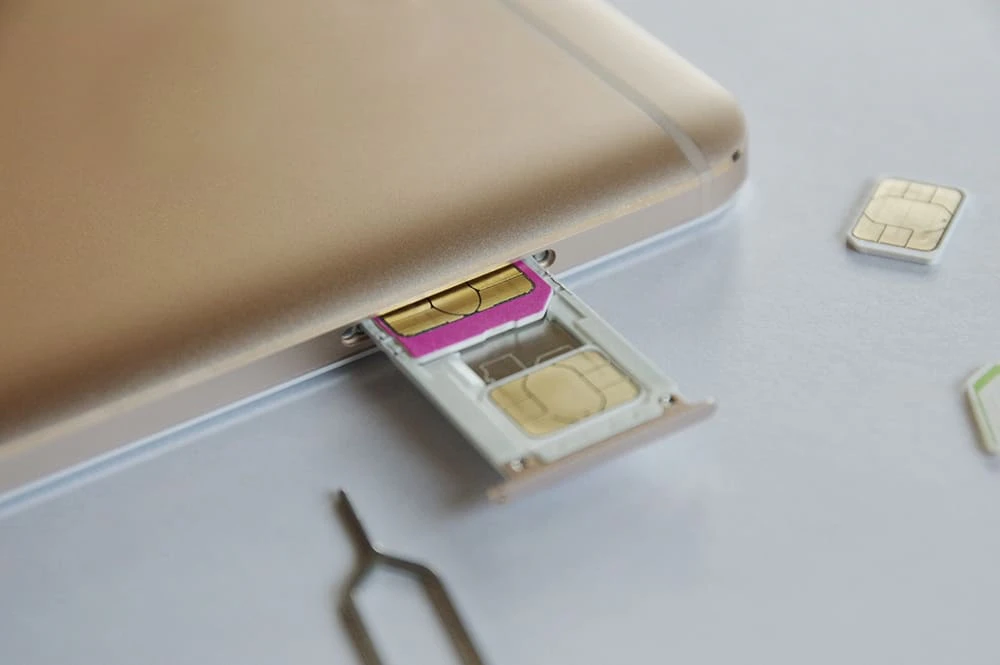
Have you ever thought, "I wish my monthly smartphone fees could be a little cheaper?" Some of you may already be considering switching to a "low-cost SIM." The word "low-cost" in the title might give you the impression that it's a good deal, but in this article we'll explain why it's so cheap and how you can use it.
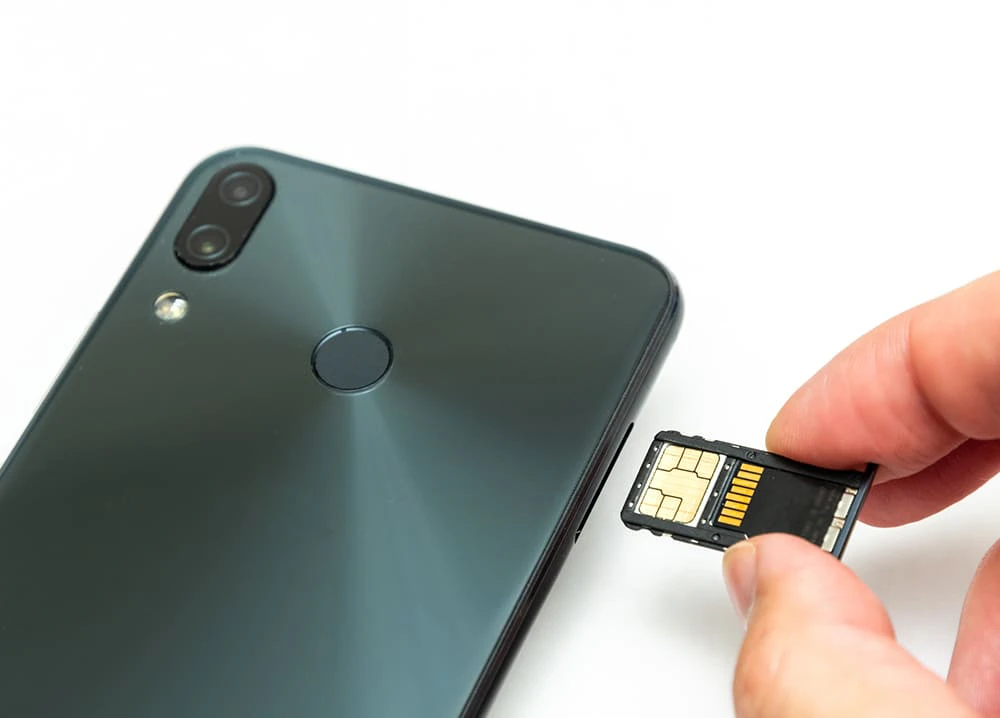
Low-cost SIM (*1) is a general term for SIM card services that are cheaper than those offered by mobile carriers. A SIM card is a small IC card that contains subscriber information such as phone numbers, and when inserted into a smartphone or tablet, it enables calls and internet access. The term "low-cost smartphone," which refers to a set that includes a low-cost SIM and a device, may also appear in similar situations.
It has also become common to use unlocked devices or SIM-free devices purchased at electronics retailers by replacing the SIM card.It is also easy to save on usage fees by replacing the SIM card with a SIM card from a telecommunications company that offers a low-cost plan (low-cost SIM).
One reason why low-cost SIM cards are cheap is their low operating costs. You can understand why they are so cheap by understanding the relationship between MNOs and MVNOs, the telecommunications companies that provide smartphones. MNOs provide services to customers while managing communication equipment (infrastructure). These are the telecommunications companies commonly known as mobile carriers. In contrast, MVNOs rent lines from MNOs to provide services to customers. Because low-cost SIM cards are provided by MVNOs, there are no maintenance or management costs for communication equipment (infrastructure). This allows smartphones and services to be offered at lower prices.
Even if you understand why they are cheaper, some people may be concerned about the speed and ease of use. We have compiled a Q&A format of common concerns about low-cost SIM cards.
A1: It has been pointed out that communication speeds may decrease during periods of congestion.
As mentioned above, low-cost SIM cards are operated by renting communication facilities (infrastructure) from mobile carriers. Therefore, it has been pointed out that the lines may become congested during commutes, school or work, lunch breaks, and late at night, which can cause slower or more disrupted communication speeds. Each telecommunications company has different countermeasures, so it is a good idea to compare them on each company's website.
A2: It is now possible to switch carriers by using "MNP".
"MNP" (Mobile Phone Number Portability) (*2) is a system that allows you to keep your phone number when switching contracts from another carrier. By using MNP, you can continue to use your current phone number with the new carrier. If you are unable to use MNP, please consult with your carrier.
A3: If the device is listed as a compatible model published by the telecommunications carrier and the SIM lock has been unlocked, it should work.
There is a way to switch carriers without changing your phone model by simply signing up for a SIM card and inserting it into your current smartphone. This is a way to reduce your monthly fees without having to buy a new smartphone. However, it is assumed that the model you use is compatible with the carrier's services and SIM card type, so be sure to check the carrier's website for details.

Low-cost SIM cards also have their advantages and disadvantages. Let's take a look at some of the most common ones.
The biggest advantage of low-cost SIM cards is their low monthly fees. According to the Ministry of Internal Affairs and Communications, most offer a monthly set of 6GB of data and voice calls for around 2,000 yen (*3). If you are currently under contract with a mobile carrier and want to reduce your fees, it may be worth considering a low-cost SIM card.
Some people may have had the experience of being unable to understand the complicated fees system explained to them at a mobile carrier store. The advantage of low-cost SIM cards is that they often offer simple fees plans that are easy to understand and reduce costs.
Now you can easily change your phone model or carrier by simply replacing your SIM card. You can keep your current phone model and immediately save fees by switching to a low-cost SIM card.
Next, let's look at the disadvantages. First, there is the possibility that low-cost SIM cards may not be compatible with some models. If the SIM is simply locked, you can simply unlock it, but there may be some models that are not compatible with the combination of carrier and SIM card. It is recommended to check in advance whether your model can be used with the low-cost SIM card you want to use.
Depending on the low-cost SIM you use, LINE's functions may be limited. For example, age verification, which is made possible by linking your phone carrier's contract information, may become unavailable if you use a low-cost SIM. Some people may see this as a disadvantage, as it means that you will no longer be able to use features such as ID search that come with age verification.
Those who use services provided by mobile carriers should be careful. For example, if you use carrier billing for everyday shopping, you will need to find an alternative method. However, carrier email addresses, which previously required changing, are now available as portable services from carriers such as au (*4).
Some companies only accept credit cards as a payment method. If the low-cost SIM only accepts credit cards, you may be denied use depending on the credit card company's screening results. There are also low-cost SIMs that allow payment by bank debit, so be sure to check their website.
There are three types of SIM cards depending on their size(*5): standard SIM (15mm x 25mm), microSIM (12mm x 15mm), and nanoSIM (8.8mm x 12.3mm). Be sure to check the size of the SIM card for the low-cost SIM you want to use and the model you plan to use to avoid making a mistake.
*5: "What is a SIM card? Explaining the basics of SIM cards for first-time users" (UQ mobile)
There are MVNOs that do not have physical stores. This can be a disadvantage if you have to do procedures and support online. However, recently, the number of MVNOs with physical stores has been increasing. When choosing an MVNO, it is a good idea to check whether or not they have physical stores to avoid disadvantages.
As already explained, because low-cost SIM cards rent communication equipment (infrastructure) from mobile carriers, it has been pointed out that communication speeds may be slow during times of congestion.

Keeping the pros and cons in mind, let's actually choose a low-cost SIM. We've put together some points to keep in mind when choosing. Please use this as a reference.
Check how much you normally use your smartphone. You'll want to check in particular the amount of data and calls you make. In terms of data, if you only use 5GB a month, but your plan allows up to 20GB of data per month, that means you're wasting 15GB every month. It's a good idea to check your data usage using apps or your bill, and choose a plan that's close to your usual usage.
You should also consider plans and options based on calling charges. Depending on your calling style, there are options such as "a completely flat rate plan that doesn't depend on the number of calls or the duration of each call," "a plan that gives you XX minutes of free calls per month," and "a plan where the first XX minutes are free, and any number of calls under XX minutes are free." Choose the plan and options that best suit your usual calling style.
A low-cost SIM with stable communication speeds is best. Of course, it depends on which mobile carrier you are using your line with, but it can also be helpful to check the communication speed data on the MVNO's website, although these are only theoretical figures.
The number of low-cost SIM cards that support 5G*6 is on the rise. If you want to use one, it's a good idea to check whether there is a 5G(*6) compatible plan and also the area where it is available. The 5G(*6) coverage area is still expanding, so your home or workplace may still be outside the coverage area. Check the website of the mobile carrier you are using the line from for the latest information.
*6: 5G is available in some areas. For more information, please visit the website below.
Reference "Supported Area" (povo)
As mentioned earlier, check the size of the SIM card in your current device. You should also check whether the service of the new MVNO you are signing up with is compatible and whether the size of the SIM card they provide is acceptable.
We've introduced you to low-cost SIM cards, but some of you may still be unsure about actually switching. If that's the case, why not consider an online-only brand? Online-only brands are services offered by mobile carriers with lower-than-normal fees.
Online-only brands have simplified their systems by limiting support and procedures to online only, making them as cheap as budget SIM cards. Moreover, unlike budget SIM cards that are operated by renting communication facilities (infrastructure), they use the same lines as the main brands of mobile carriers, which means that communication speeds are less likely to drop during times of congestion. If you're still unsure about budget SIM cards, why not take another look at online-only brands?

If you're looking to sign up for an online-only brand, we recommend povo. The fees plan "povo2.0"*7 has a basic fees of 0 yen*8 and allows you to add paid Topping that suit your needs. Add Topping as you like based on your data usage and call time. There's no need to sign up for and pay for services you don't use.
*7: Reference “povo2.0” (povo)
*8: If no paid Topping purchases are made for 180 days or more, your subscription may be suspended or terminated. In addition, if you subscribe to 5 lines(*) under the same name, a contract administration fee of tax included 3,850 yen/line will be charged for the 6th line and thereafter.
*Including lines that have been terminated or cancelled by the Company within the past year. If you do not purchase data Topping, the maximum sending/receiving speed is 128 kbps. Domestic calls are charged at tax included 22 yen/30 seconds, and sending SMS is charged at tax included 3.3 yen/text (up to 70 characters). Some calling rates, such as calls to satellite phones, may differ. Click here for details.
We use au 4G LTE network, which has achieved a population coverage rate of 99.9%*9, so you can use it with peace of mind, knowing that you can enjoy coverage and quality. povo also offers access to the 5G*6 network. This is included in the Topping fees, so you can enjoy high-speed 5G*6 communication at no additional fees.
*9: "Population coverage rate" is calculated based on areas where communication is possible in 50% or more of the approximately 500m blocks used in the census. Information listed is as of the end of December 2020. Content is subject to change.
*6: 5G is available in some areas. For more information, please visit the website below.
Reference "Supported Area" (povo)
In addition, with povo, you will need to apply for a service and it will cost money, but you can keep the carrier email address you used with au *4 and other carriers. If you keep it, you won't need to change your registration information on shopping sites or contact your acquaintances and friends. You can use povo in a way that suits you, with the same phone number and email address, including MNP.
We are currently running a "New Registration Campaign," where anyone who enters the campaign code "2MAIME" when signing up for povo2.0 will receive 1GB of data that can be used for three days (= "Prepaid Code 1GB (3 days)"). We are also running a lottery where you are guaranteed to win either one "Unlimited data * 10 Bonus (3 days)" or two "Unlimited data * 10 Bonus (24 hours)." For more information, click here.
For other current campaigns, please click here.