You may come across the term "LTE" when researching smartphones and other devices. It is a type of mobile phone communication standard and has been widely used since around 2010, but few people may know exactly what LTE is. In this article, we will introduce the features of LTE and how it differs from other communication standards.
*1: 5G is available in some areas. For more information, please visit the website below.
Reference "Supported Area" (povo)
LTE is a mobile phone communication standard that lies between the third generation of mobile phones, "3G," and the fourth generation of mobile phones, "4G." Some carriers refer to it as "3.9 generation (3.9G)," while others describe it as a standard that is included in 4G (*3). The name LTE is an acronym for "Long Term Evolution," which means "long-term evolution."
LTE was commercialized around 2010 (*4). The second half of the 2000s was the period when the transition from mobile phones to smartphones began, with Apple releasing the iPhone in 2007 and smartphones running Google 's Android in 2009. Mobile phone communication standards have also evolved to accommodate the smartphone era, enabling high-speed, high-capacity communications, while also improving frequency utilization efficiency and enabling wider bandwidth than 3G. This is LTE.
LTE radio waves are emitted from radio stations installed by each telecommunications carrier, and are said to have a wide reach, allowing stable internet access anywhere. 3G introduced new technology to reduce delays in data transfer and the transition from standby to communication mode. This means that LTE can start communication and achieve faster maximum speeds than 3G. LTE communication speeds are 37.5 to 150Mbps (*4), which is said to be about 15 times faster (*5) than 3G.

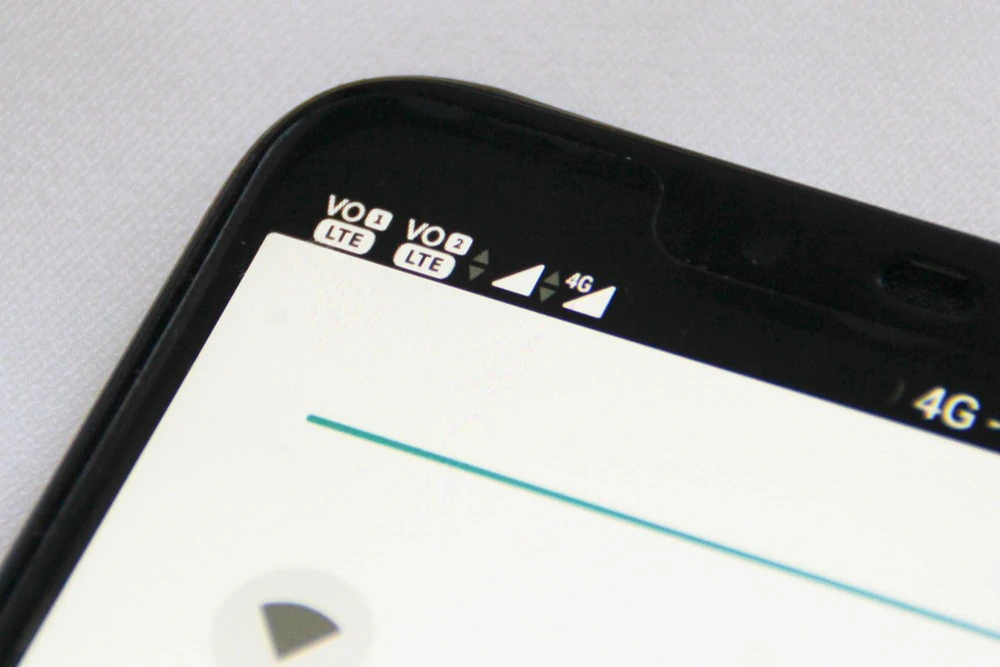
VoLTE, a calling service that uses LTE, has also helped to improve the convenience of smartphones. VoLTE is an abbreviation for "Voice over LTE" (*3). This technology enables voice calls over LTE lines by converting voice data into digital data and treating it as packets like other data.
Previously, when making a voice call, there was a waiting time to switch to the line for the call. Another issue was that data communication speeds would slow down when using data communication while making a voice call. The introduction of VoLTE has shortened calling times and improved communication quality when using voice calls and data communication simultaneously. Furthermore, VoLTE allows you to enjoy higher quality voice calls and video calls than ever before.
We've mentioned that LTE is a mobile phone communication standard that lies between 3G and 4G, but many people may not even know what those standards are. We'll introduce the mobile phone communication standards that came before and after LTE, including the latest, 5G (*1).
Before the advent of 3G, communication standards varied from country to country. 3G was developed as a mobile phone communication standard with the goal of "enabling people to use the same devices all over the world." 3G services began to be offered in Japan around 2001.
One of the features of 3G is that it allowed many users to share the same frequency at the same time. Around the same time as the introduction of 3G, mobile phones also became more multifunctional, with cameras and the ability to send captured images by email becoming available.
As the need to use a variety of content on mobile phones grew, some people began to feel that 3G was not enough. As a result, technologies specialized for faster data communication were developed and introduced by advancing 3G (HSDPA and EV-DO). The mobile phone communication standard that introduced these technologies was called "3.5G."
Although LTE is sometimes considered part of 4G, the fourth generation is strictly the mobile phone communication standard called LTE-Advanced, which was officially approved by the ITU in 2012 and began providing services in Japan in 2014.
One of the features of LTE-Advanced is that communication speeds have evolved from megabits to gigabits. This has made it possible to watch large amounts of video content smoothly. As a result, it is said to have contributed to the emergence of new services such as cloud computing, big data, IoT, AI, and VR/AR.
Then, in 2020, 5G (*5) services began to be offered. 5G (*5) is expected to be a next-generation mobile communications system that not only further advances high-speed communications, but also adds new features such as ultra-low latency communications and multiple simultaneous connections. Specifically, it is thought that 5G (*5) will enable communications with the following speeds and specifications.

This time we introduced LTE, but if you are considering a carrier plan with the latest mobile phone communication standard, 5G (*1), in mind, we recommend that you also consider "povo2.0."
povo2.0 has a basic fees of 0 yen (*7) (*8) (*9), and allows you to customize your original smartphone plan by adding paid Topping that suit you. 5G (*1) usage fees are included in Topping and there are no additional fees. Furthermore, in addition to au 's 5G (*1) line, we also use the au 4G LTE line, which has a population coverage rate of 99.9% (*10), to provide an environment where smartphones can be used in a wide area across the country.