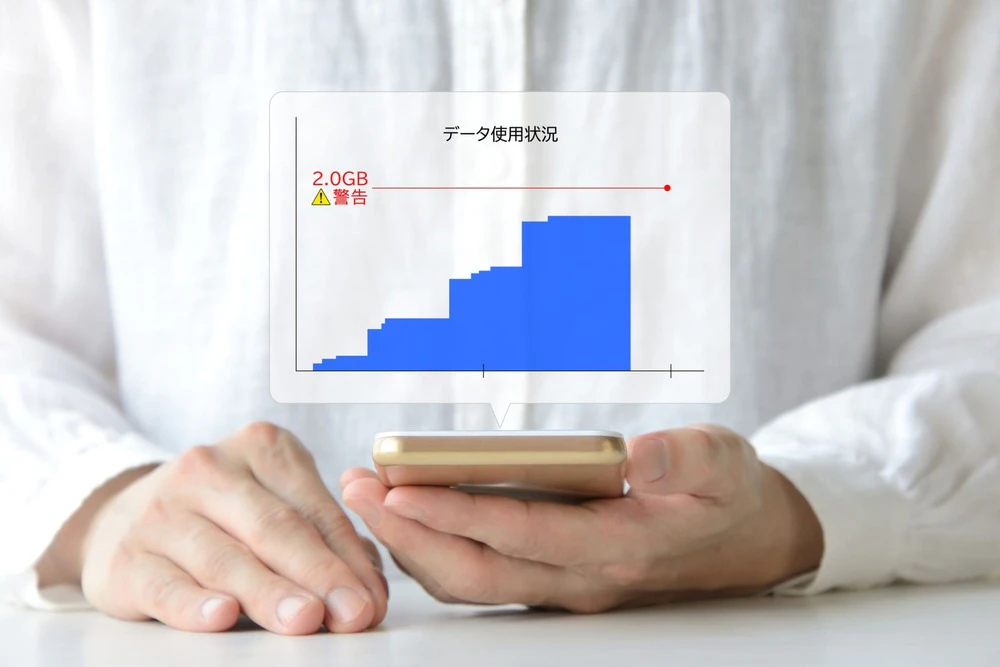
The number of companies offering low-cost smartphones is on the rise. Many people are curious about low-cost smartphones as their friends and colleagues switch to them one after another. This article summarizes basic information about low-cost smartphones for those who are interested but don't really understand what they actually are.

"Budget smartphone" is a general term for mobile phone services that are provided while renting the communication equipment necessary to deliver radio waves (*1). When you only use a carrier's SIM (SIM card or eSIM), it is called a "budget SIM," and when you purchase a device along with a SIM contract, it is called a "budget smartphone." Alternatively, the terms "budget SIM" and "budget smartphone" can also be used to refer to the carriers themselves that provide the service.
Some people may think that a low-cost smartphone is a device that can be purchased at a low price. While it can refer to a device that can be purchased at a low price, the term low-cost smartphone is increasingly being used to refer to a device that is sold as a set with a SIM card that has a low usage fees.
Telecommunications carriers that own their own communications equipment are called "Mobile Network Operators" (MNOs), while those that offer low-cost smartphones only through rental are called "Mobile Virtual Network Operators" (MVNOs) (*1). There are fewer mobile communications carriers than mobile virtual networks operators, and in Japan there are only four that fit the description: KDDI, NTT docomo, SoftBank, and Rakuten Mobile.

The number of low-cost smartphone users is on the rise. This is likely due to the fact that they are cheaper than smartphones offered by mobile carriers, but why are low-cost smartphones so cheap? Below we will explain the trends among low-cost smartphone users and the reasons for their low prices.
On October 27, 2020, the Ministry of Internal Affairs and Communications published the "Action Plan for the Development of a Fair Competitive Environment in the Mobile Market." The plan aims to stimulate competition among telecommunications carriers, with the aim of realizing fees and services that are easy for users to understand and accept (*2).
Thanks to these efforts by the Ministry of Internal Affairs and Communications, new fees plans with lower usage fees than before have appeared one after another, stimulating the market. In particular, the proportion of low-cost smartphone contracts in the overall mobile phone (smartphone/mobile phone) market is increasing year by year (*3), and it can be said that people are switching from smartphones operated by mobile telecommunications carriers to low-cost smartphones with lower usage fees.
The reason why low-cost smartphones are so cheap is because the costs of providing the service are kept low. For example, the costs of installing and maintaining communication equipment are kept low. Basically, carriers that offer low-cost smartphones only have to pay the cost of renting part of the network from mobile carriers. Because the costs are lower than if they were to install and maintain the equipment themselves, low-cost smartphones can offer lower usage fees.
In addition, the costs of sales offices and support stores can be kept low. It is not uncommon for telecommunications carriers to have no physical stores and limit support to the internet. Without physical stores, there is no need to pay rent and the number of operating staff can be reduced, which in turn reduces usage fees.
There's basically no difference in what you can do with a low-cost smartphone and one operated by a mobile carrier. You can use the internet, as well as various social media platforms, chat apps, and even voice calls (if you use a voice call SIM). In some cases, low-cost smartphones don't offer carrier email, but you can use free email services like Gmail, so this shouldn't be a problem.
As already mentioned, low-cost smartphones use the communication facilities of mobile carriers, and so are said to have the same communication areas as the carriers (*1). However, they only rent part of the network. For this reason, it has been pointed out that communication speeds may be slow during congested times, such as during commute times or lunch breaks (*1).
In addition, each budget smartphone offers unique services to set itself apart. For example, some offer plans with data usage of less than 1GB for those who mainly use voice calls and email, or options* that allow unlimited viewing of certain video streaming services without data restrictions (*1).

There are a few points to keep in mind when using a budget smartphone. Knowing these beforehand will help you avoid unexpected problems. Below are three key points to keep in mind. If you're considering switching to a budget smartphone, please keep this in mind.
Companies such as au, docomo, and SoftBank offer services (*4) that allow you to continue using the carrier email address (email address) provided by your carrier even if you switch to another company. If you switch to a low-cost smartphone carrier that does not offer carrier email, some people may want to continue using their previous carrier email.
However, for services that allow you to continue using your carrier email address, you will need to pay a monthly fees to the original carrier that issued you the address, in addition to the monthly fees to the new carrier. Also, after canceling your contract with the carrier that issued you the address, you will generally not be able to continue your carrier email address unless you apply for an option within 31 days. There are other conditions for continuing your carrier email address besides the deadline, and these conditions vary depending on the carrier, so be sure to check in advance.
*4: Reference: "Portable au Mail" (au)
Depending on the budget smartphone, some functions of the LINE app may not be available. This is because some budget smartphones may not be able to use age verification systems used by mobile carriers (*5). A typical example is the LINE ID search.
However, there are several other ways to exchange contact information on LINE. For example, you can add someone as a friend by scanning a QR code®. Simply show the QR code® to the person you want to exchange contact information with, and they can add you as a friend by scanning the QR code®. This is a good method to try if you can't search for a LINE ID.
*5: Reference: "What is a low-cost SIM? An easy-to-understand explanation for beginners" (povo)
Some low-cost smartphone carriers may not carry the latest models. If you want to use the latest model that is not available, you will have to prepare the device yourself. However, you can use the latest model by purchasing the device at a manufacturer's direct store or electronics retailer and signing up for a low-cost SIM card only.
However, some models may not be compatible with the low-cost SIM you want to use, so be sure to check the website or other sources beforehand to see which models are compatible.
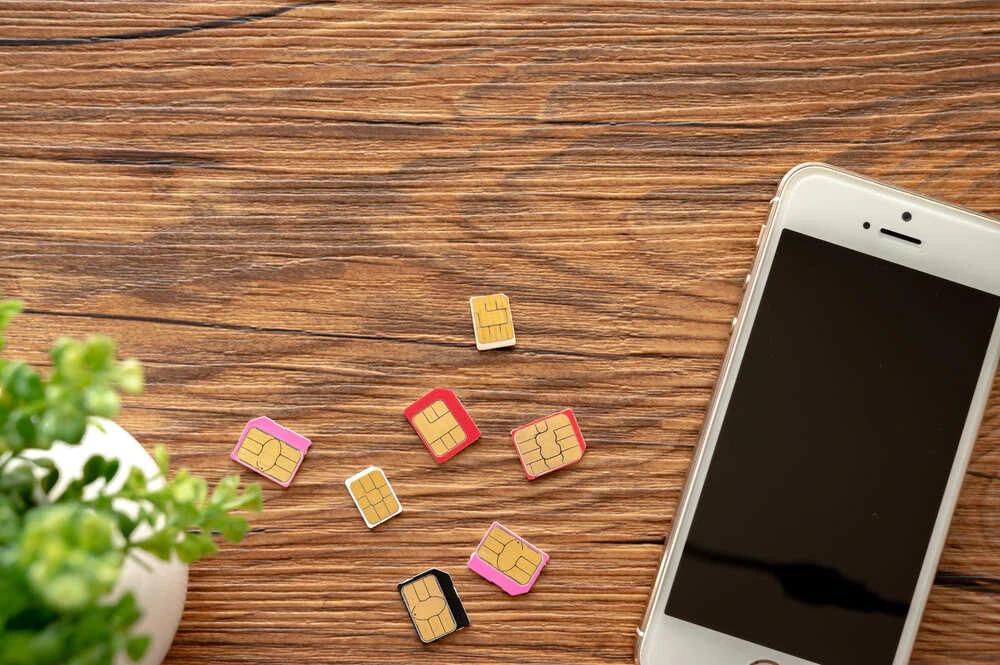
If your current smartphone is a compatible model that has been confirmed to work, you can use it as a low-cost smartphone by simply replacing the SIM card with a low-cost SIM card (*5). Models that have been confirmed to work are listed on the websites of low-cost SIM carriers. Be sure to check before switching.
*5: Reference: "What is a low-cost SIM? An easy-to-understand explanation for beginners" (povo)
If you don't currently have a smartphone, there are two ways to purchase one:
The first way is to purchase a device from the low-cost smartphone carrier you are signing up with. If you purchase a smartphone as a set with a low-cost SIM, you can use it with confidence because it is a model that has been confirmed to work. If the model you want is sold by the low-cost smartphone carrier, it may be a good idea to purchase the device at the same time as signing up for the low-cost SIM.
The second option is to purchase the device separately. As mentioned above, you can also sign up for a SIM card and use your own device. This option allows you to choose from the latest models and your favorite older models in addition to those offered by low-cost smartphone carriers, which may be a good option for some people.
By the way, you can also purchase the device only from au online shop without signing a contract, without having to purchase from a manufacturer's direct store or electronics retailer. Please check the dedicated page (*6) for the procedures and conditions for purchasing the device alone. As mentioned above, you should also check in advance whether the model is compatible with the SIM card provided by the low-cost smartphone carrier you are signing up with.
*6: Reference: "Procedure for purchasing a smartphone alone" (au)

We've provided an overview of budget smartphones and some important points to bear in mind. While budget smartphones offer inexpensive and simple fees, most offer flat-rate monthly plans. For those whose monthly data usage fluctuates, we recommend "povo2.0," which offers a basic fees of 0 yen (*7) (*8) (*9) and allows you to purchase data capacity as needed. There are five additional data plans available, ranging from 1GB for 390 yen (tax included included) per use (valid for 7 days) to 150GB for 12,980 yen (tax included included) per use (valid for 180 days). A variety of additional Topping are also available, including "Unlimited data (24 hours)" (*10) and "unlimited voice calls" (*11). You can combine Topping to suit your smartphone usage.
povo2.0 communicates using the au network. Of course, you can also use au 's 5G (*12) network at no additional fees. If you're looking for a budget smartphone, we recommend povo2.0 which allows you to customize your fees plan more freely.
*12:5Gは一部エリアでの提供です。詳しくは下記のサイトよりご確認ください。
参考:「対応エリア」(povo)