What are the benefits of using a SIM-free smartphone?
"If it's SIM-free, can I sign up for a low-cost SIM of my choice?"
As such, many people may not have a clear idea of what a SIM-free phone is.
Simply put, a SIM-free phone is a smartphone that is not locked so that you can use a SIM card from a carrier other than the one you have a contract with.
It may seem like a hurdle if you're not familiar with the term, but this article provides a clear explanation of the basics of SIM-free and SIM-locked services, so please take a look.
We will also introduce the advantages and disadvantages of SIM-free smartphones, as well as tips on how to choose one.
![[Basic knowledge] What is a SIM card?](/cms/povo/img/service/library/article-008/article-008_2.webp)
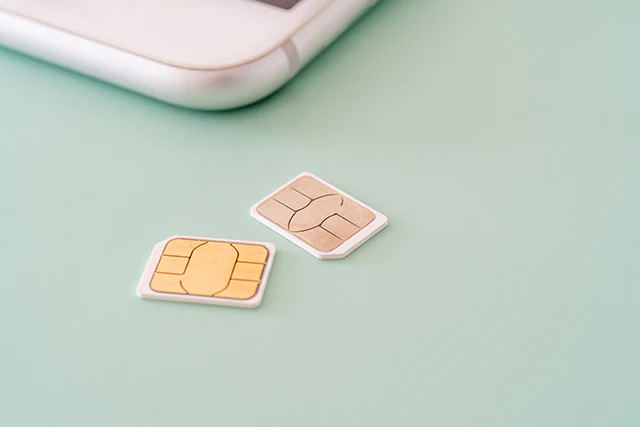
SIM is an abbreviation for "Subscriber Identity Module," which literally means "subscriber identification module."
It is called a SIM card because of its card-like shape, and contains the subscriber's information (excluding eSIMs that are built into the device).
By linking the subscriber information recorded on this SIM card with your phone number, you will be able to use data communication and make calls.
Reference: What is a SIM? Understanding the basics of SIM cards
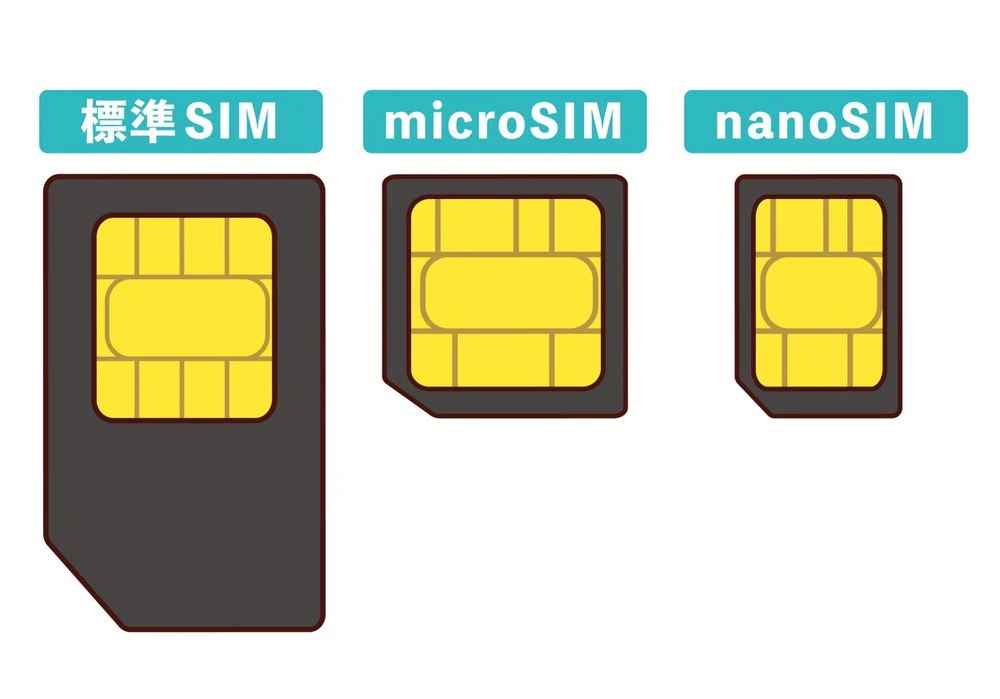
SIM cards, which contain the subscriber's identification information, come in three sizes, with the current mainstream being the "nanoSIM."
| SIM card types | size |
|---|---|
| Standard SIM | 25mm×15mm |
| microSIM | 15mm×12mm |
| nanoSIM | 12.3mm×8.8mm |
For example, if the carrier you plan to switch to uses nanoSIM, your smartphone must also be nanoSIM compatible.
As you can see, there are different sizes of SIM cards, so you need to check in advance which size is compatible with your smartphone.
Now that we understand the sizes of SIM cards, let's look at the different types based on their functions.
| Types by function | Content |
|---|---|
| Data SIM | Only mobile internet is available |
| Data SIM with SMS function | Internet and SMS (short message) available |
| Voice call SIM | Calls, internet and SMS are all available |
For example, if you plan to use it as your main smartphone, we recommend a voice call SIM that allows you to make calls, use the internet, and send SMS.
On the other hand, if you are using it as a secondary smartphone, some carriers offer plans that specialize in high-volume data communication, so you can get the most value by using them appropriately.
As such, when choosing a SIM card, consider not only the size, but also the features that are best suited to the purpose for which you will use your smartphone.
In addition to physical SIM cards, there is also a type called "eSIM" that is built into the device.
Unlike card-type SIM cards, the SIM card is built into the device, so there is no risk of losing it.
The advantages of eSIMs include "no need to replace them like with SIM cards" and "the process is quick as you can activate it online."
If you would like to learn more about eSIM, please refer to the following article:
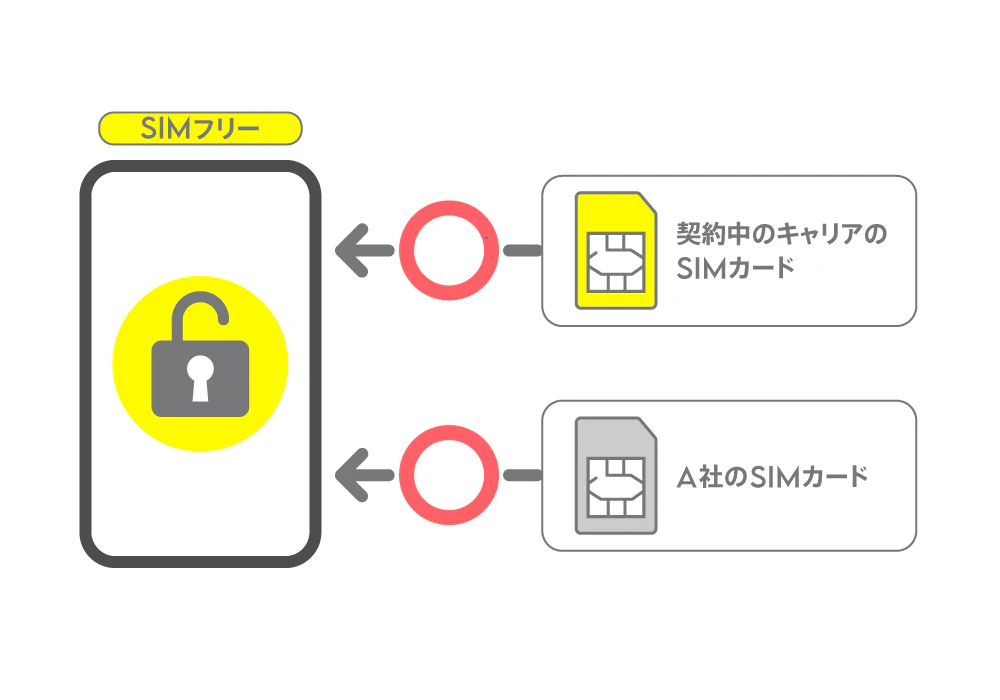
So far, we have given a brief overview of SIM cards. Now, let's dig deeper into the main topic, "SIM-free."
First of all, a SIM-free smartphone is a smartphone that is not locked so that you can use a SIM card from a carrier other than the one you currently have a contract with.
Because the device is unlocked, users can sign up with the carrier of their choice.
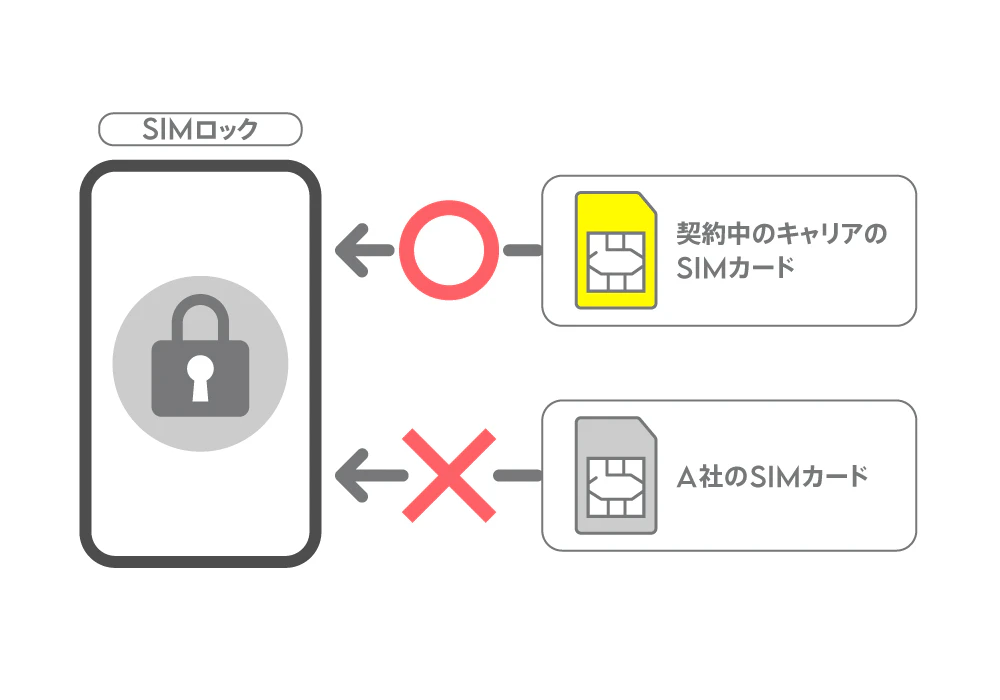
Since this is an important part of the subject of this article, we will explain SIM lock once again in an easy-to-understand manner.
SIM lock refers to a state in which a device is locked so that it can only be used with a specific carrier.
There was a time when this system was introduced mainly by major carriers to prevent non-payment of device fees and resale.
However, due to the revision of the "Guidelines for Ensuring the Smooth Distribution and Use of Mobile Terminal Equipment" in August 2021, devices released after October 1, 2021 will, in principle, be SIM-free.
Please note that smartphones purchased before September 2021 may be SIM-locked. If this is the case, you will not be able to use the phone even if you sign up for a new SIM card with another carrier unless you unlock the SIM.
If you have a smartphone purchased before September 2021, start by checking whether or not it is SIM-locked.
[iPhone users]
We will show you how to check the SIM lock on devices with iOS 14 or later.
If you are using a device with iOS 13 or earlier, please contact your carrier.
[Android users]
For some Android models, you can check whether the SIM is locked by following the steps below.
If you are unable to confirm your identity even after following the steps, please contact your carrier.
Please note that the notation may differ depending on the Android model.
Next, let's look at how to unlock your SIM if it is locked.
There are the following ways to unlock the SIM lock.
To deactivate your car at a store, you will need to provide identification such as a driver's license or My Number card. Please note that there will be no cancellation fee after October 1, 2023.
If you wish to cancel via the website, you can proceed through the member support page of your contracted carrier, and just like in-store, there is currently no cancellation fee.
For details on how to unlock the SIM card of each major carrier, please see the article below.

From here, we will introduce the benefits of having a SIM-free smartphone that is not SIM-locked.
The advantage of having a SIM-free smartphone is that you can choose freely without being restricted by carriers or networks.
For example, you might say, "fees with my current major carrier have become too expensive, so I want to switch to another carrier."
If you have a SIM-free smartphone, in cases like the ones above, you can switch to a low-cost SIM that offers a plan that suits you.
Furthermore, it may be a good idea to switch to a carrier with a more stable network, taking into account factors such as base stations and population coverage in your area.
In this way, one of the features of SIM-free phones is the high degree of freedom in choosing carriers and lines.
As the name suggests, a dual SIM compatible smartphone is a type of smartphone that allows you to insert "dual" or "two" SIM cards into one smartphone.
If you have a SIM-free smartphone that supports dual SIMs, you can use two phone numbers on one device, and you can use one for calls and the other for data communication, which is very convenient.
If you sign up with different carriers, you may be able to get a better deal than if you sign up for a ` Calls+Data'' package with one carrier.
As you can see, SIM-free smartphones and dual SIMs work well together, so we recommend them.
Reference: What is Dual SIM? You can use two lines on one device! Explaining the advantages and disadvantages
With a SIM-free smartphone, you can freely choose the carrier and plan you sign up with, so you can switch from a major carrier to a low-cost SIM and reduce your usage fees.
Recently, there are many low-cost SIM cards that offer large amounts of data at reasonable prices.
We also recommend taking this opportunity to review your smartphone usage fees.
An overseas SIM card is a SIM card used to access mobile networks overseas.
Basically, when you travel, you will not be able to use the domestic mobile network you have been using, so you will need to purchase a SIM card that is compatible with the local area.
Although it is possible to purchase international SIM cards at your destination, they can also be purchased at electronics retailers, stores in international airports, and even online shops in Japan.
If you don't have a SIM-free smartphone, your communication options will be limited, such as renting a Wi-Fi router that can be used at your destination or using the overseas plan of your current carrier.
By using a SIM-free smartphone, you can insert a local SIM card when you travel abroad, expanding your range of communication options.
If you would like to know more about the benefits of overseas SIM cards and how to purchase them, please see the article below.
Reference: What is an overseas SIM card? A detailed explanation from how to purchase to how to use it
As already mentioned, devices released after October 1, 2021 will be SIM-free as a general rule.
In addition, SIM-free devices are available not only new but also on the used market, so there are plenty of options to choose from.
For example, while you can keep your usage fees low with a low-cost SIM plan, another benefit is that when you replace your device, you can further reduce costs by choosing a used SIM-free smartphone.

SIM-free smartphones have the advantage of allowing you to freely choose your carrier and line, but there are also some disadvantages that you should be aware of in advance.
Basically, with a SIM-free smartphone, you can choose the line you want to use, but you cannot use all lines.
This is because each carrier uses a different frequency band, so you need to choose a model that matches that frequency band.
You need to be careful because if you purchase a model that does not match the carrier's frequency band, you will have the disadvantage of not being able to use the line you want to use.
Check the "List of Compatible Models" on each carrier's website to see if your smartphone or the one you plan to purchase is compatible with the frequency band.
With a SIM-free smartphone, you can freely choose your carrier and line, so many people choose plans that offer great deals on basic fees and data charges, like low-cost SIMs.
However, one of the reasons why low-cost SIM cards can offer such great plans is that they cut labor costs and advertising expenses.
Therefore, depending on the carrier you use, they may not offer face-to-face support and may be able to offer reasonable fees by completing the process online.
Also, be aware that even if face-to-face support is available, it may be charged a fee.
As such, this may be inconvenient for those who are accustomed to the extensive face-to-face support provided by major carriers.

From here, we will introduce four points to consider when choosing a SIM-free smartphone and plan for those who are considering purchasing one.
As mentioned in this article, there are different types of SIM cards depending on their size and format.
If the smartphone you plan to purchase does not support the size of the SIM card sent by your carrier, you won't even be able to insert it.
When purchasing a SIM-free smartphone, be sure to check the SIM card size on the website of the carrier you plan to use in advance to see if it is compatible.
Additionally, there are also SIM-free smartphones that support dual SIM and eSIM.
A dual SIM smartphone allows you to use two lines on one device, so you can have two phone numbers, one for work and one for personal use, and have separate plans for voice and data communication, making it more cost-effective to use.
Furthermore, some SIM-free smartphones have eSIMs, which are not physical SIMs but are built into the device. This means there is no need to replace the SIM, the entire process can be completed online, and it can be activated as soon as the same day.
For more information about eSIM, please see the article below.
Reference: What is eSIM, which does not require a SIM card? Explaining the advantages and disadvantages, and who eSIM is recommended for
As such, when purchasing a SIM-free smartphone, it is important to choose one that suits your ease of use and purpose.
As mentioned in the disadvantages of SIM-free smartphones, each carrier uses a different frequency band, so you need to choose a model that matches that frequency band.
Therefore, before purchasing a SIM-free smartphone, be sure to check the "List of Compatible Models" on each carrier's website to see if the device you are considering is compatible with that frequency band.
Currently, each carrier offers a variety of plans based on data capacity, call time, and campaigns.
The plan that suits you will vary depending on how much data you use each month and how you use it.
First, imagine how you'll use it and start by comparing each plan.
Here are some things to keep in mind when comparing plans:
How many GB of data can be used?
- How much fees when comparing the same data capacity of each company?
What is the communication speed?
・Are there any advantageous campaigns when switching?
- Flat rate or pay-as-you-go system, etc.
If you are having trouble deciding how much data you need, please refer to the following article:
SIM-free smartphones offer a wider range of carriers and lines to choose from.
On the other hand, carriers that offer low-cost plans may not offer in-person support in order to cut labor and advertising costs.
Consider the following points when checking your support system:
- Availability of store, telephone, and chat support
- The completeness of the website's FAQs
・Support response time
If you want to know the basics of how to choose a smartphone, please refer to the article below.
Reference: How to choose a smartphone you won't regret? Popular specs explained!
There are two ways to use a SIM-free smartphone:
Let's take a look at each one.
For details on how to check whether your smartphone is SIM locked and how to unlock it, please refer to "How to unlock the SIM lock."
As a rule, most smartphones currently on the market are SIM-free, so we recommend purchasing a SIM-free smartphone from the start.
You can also purchase SIM-free smartphones from au Online Shop.
Below we have compiled some frequently asked questions when considering a SIM-free smartphone, so please feel free to use this as a reference.
If you want to change carriers on a SIM-free smartphone, there may be times when you don't want to change your phone number.
In such cases, we recommend a system called MNP (Mobile Number Portability).
MNP is a system that allows you to keep the same phone number even if you change carriers, and there are two methods: a "one-stop method" and a "two-stop method."
For more information, please refer to the article below.
The Ministry of Internal Affairs and Communications has issued guidelines requiring that all models released after May 2015 be SIM unlocked as a general rule.
In other words, for models released before April 2015, it may not be possible to unlock the SIM in the first place.
Please check the carrier's website to see if your model supports SIM lock.
As we have already mentioned, new smartphones released after October 1, 2021 are not SIM-locked to begin with.
There is nothing wrong with buying a used SIM-free smartphone.
However, when using flea market apps or auction sites where individuals buy and sell products, there is a risk of purchasing defective products that do not work properly.
Please be careful as the previous user may not have paid for the device and it may be a device with usage restrictions (a so-called red ROM).
When purchasing a used SIM-free smartphone, choose a used shop that offers comprehensive operation checks and warranties.
If you simply unlock your SIM card and continue to use your original carrier's line, you will receive the same warranty as before the SIM was unlocked.
Also, if you change the SIM card, it will still be covered under the warranty as long as it is within the warranty validity of the carrier from which you purchased the device.
For iPhones, support is also available from Apple.
However, please be aware that if you change to a SIM card from another company, the warranty service that was added as an option when you signed up for the line will be canceled.
SIM-free models that are compatible with 5G are also now available.
In addition to your smartphone, you will also need to check whether your carrier's SIM card, plan, and communication area are compatible with 5G.
For details, please check the website of each carrier.

The advantage of making your smartphone SIM-free or purchasing a SIM-free smartphone is that users can freely choose their carrier and line.
Recently, there are also many low-cost SIM cards that offer plans with lower fees, even if the data capacity and call time are the same as those of major carriers.
For example, povo2.0 (※1), au 's online-only brand, has a basic fees of 0 yen (※2) and allows you to purchase only the amount of data you want, when you want to use it.
This is especially recommended for those whose data usage fluctuates greatly from month to month.
There are plans available such as "Unlimited data (※3) (24 hours) 330 tax included /time including tax included", "Data Top-up 3GB (30 days) 990 yen/time including tax", and "Data Top-up 120GB (365 days) 21,600 tax included /time including tax", and you can Topping depending on the amount of data you use.
If you would like to replace your device with a SIM-free one, you can also purchase it from the ` au Online Shop.''
If you are considering combining a SIM-free smartphone with a low-cost SIM, we recommend that you consider povo2.0.
*1: As this is an online-only plan, all procedures and support will be handled online. Please contact us via the povo2.0 app or official website.
Reference:" povo2.0 Plan Details"
*2:
【common】
・If you do not purchase any paid Topping for 180 days or more, your service may be suspended or your contract may be terminated.
・When the plan is 0 yen and 0GB, the maximum sending and receiving speed is 128kbps.
[Data Only]
・You will need to purchase your first Topping when signing the contract.
[Calls+Data]
・Domestic calls: 22 yen/30 seconds (tax included included). Some call charges may differ, such as for calls to satellite phones. For details, click here. In addition, designated call charges will be incurred when calling phone numbers for which other companies have set their fees.
・Domestic SMS sending: 3.3 yen (tax included included) / message (up to 70 characters) Receiving: Free Depending on the model, you can send up to 670 full-width characters. However, up to 134 characters will incur a sending fee of two messages, and after that, one message will be charged for every 67 characters.
*3: Communication speeds may be limited during network congestion or when using video or cloud games.